Dance, created in 1979, is considered to be a pinnacle of post-modern dance, a minimalist ballet that strips dance back to the language of the body. This seminal piece marks the first major collaboration of Lucinda Childs with the composer Philip Glass and is a must-see event for every contemporary dance fan.


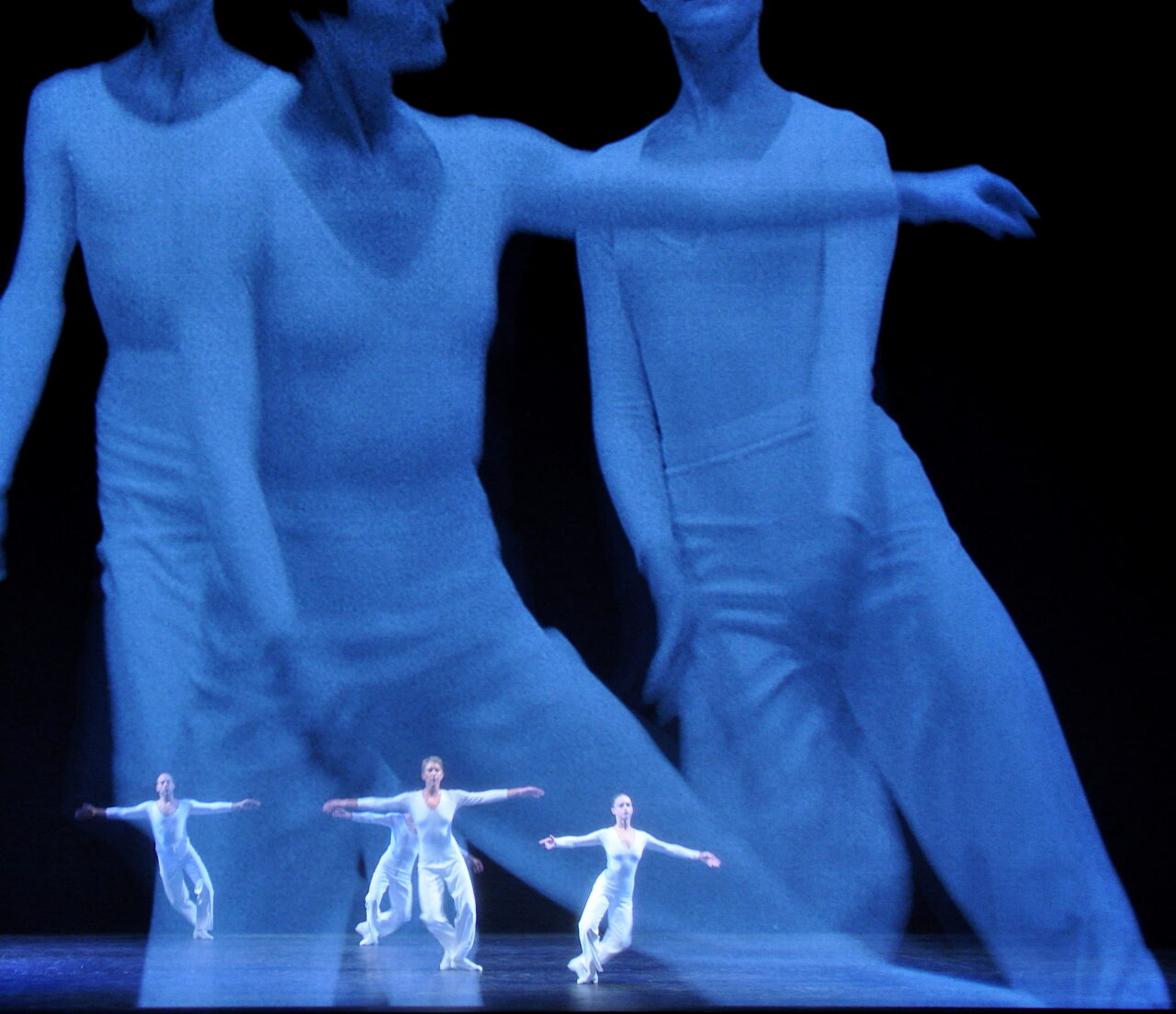
Dance – as its title says – is simply dance: the search for a choreographic composition corresponding to what it actually does. In other words, the perpetual engendering of form and shape by moving bodies. First performed in 1979, the piece constitutes a moment of synthesis in the history of dance – a bringing together of the pared-down movements of minimalist dance, in intense collaboration with musical and visual artists of the time. Set to music by Philip Glass and visuals by Sol LeWitt, the piece saw Lucinda Child’s invention of a dance full of ebbs and flows – which coincided with her work with Merce Cunningham and experiments with the Judson Church Theater. Re-staged and restored, this new version of Dance unveils a lapse in time, Sol LeWitt’s visuals giving us glimpses of the ghosts of the original dancers, including the solo danced by Lucinda Childs herself.
In three sections lasting 20 minutes each, two quartets and one solo, Lucinda Childs shapes the flow of the bodies and weaves them into the heart of the repetitive loops in Philip Glass’s music. Within the space, she draws up a geometric structure in harmony with the rhythmic quality of the music – forming a vast counterpoint echoed by the images that unfurl before our eyes. The film’s superimposed presence, and the interplay on scale and angles it brings forth, produces a ghostly interpenetration of the silhouettes and their doubles. This dizzying effect transports the spectator’s eye directly to the core of the movement and gives the space a sense of volume – as though all the lines cutting through the space assembled in a dream-like way, sliding and floating around in a fluid-like, timeless space. The result is a concentration of minimalism, akin to perpetual movement.