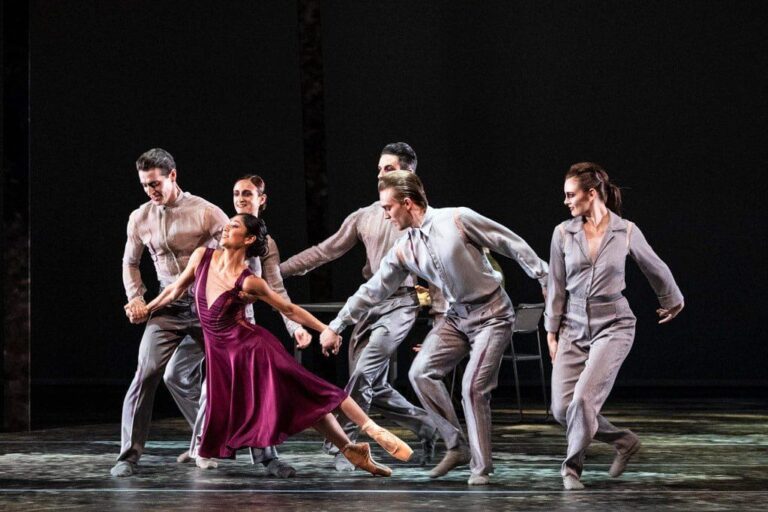
Back in 1924, this vibrant production brought together some the greatest creative minds of its time – choreographer Bronislava Nijinska, writer Jean Cocteau, artist Pablo Picasso, designer Gabrielle Chanel and composer Darius Milhaud – to blend dance, visual art, fashion and music into a thrilling interdisciplinary experience.
Now, English National Ballet reimagines this iconic work for the 21st century in the same spirit of collaboration, innovation, and elegance.
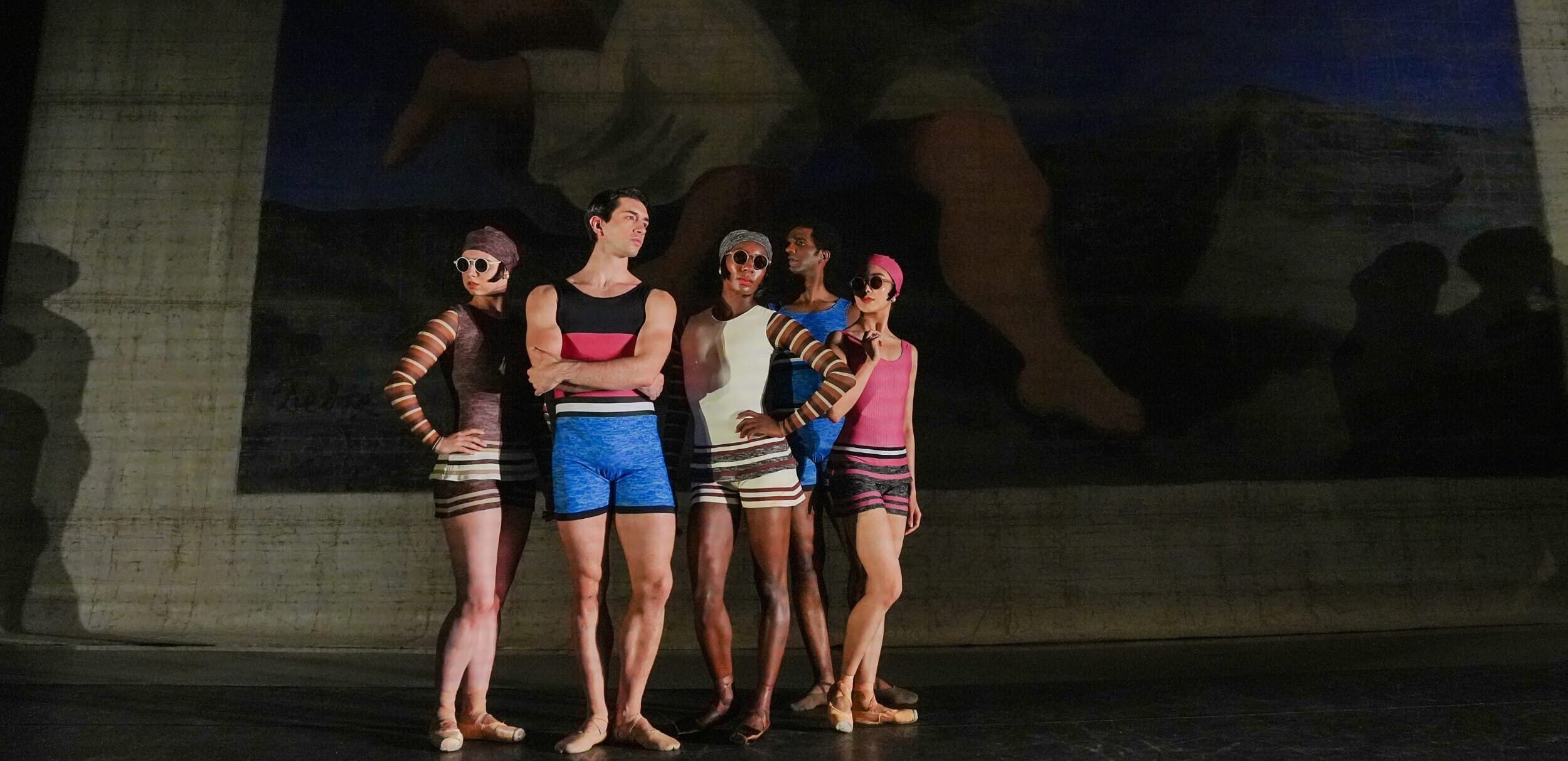
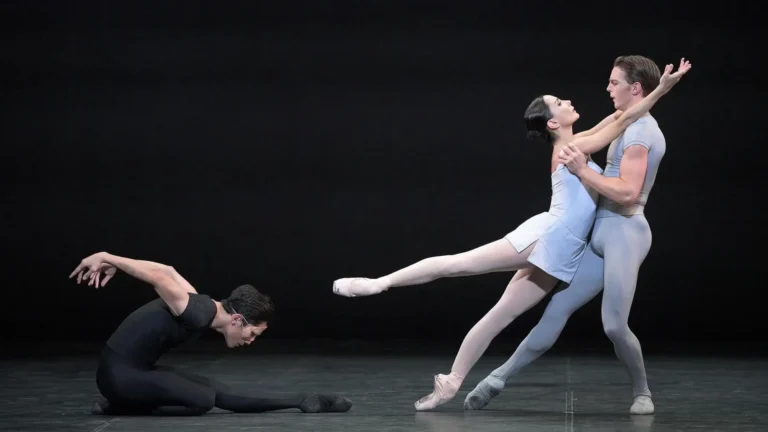
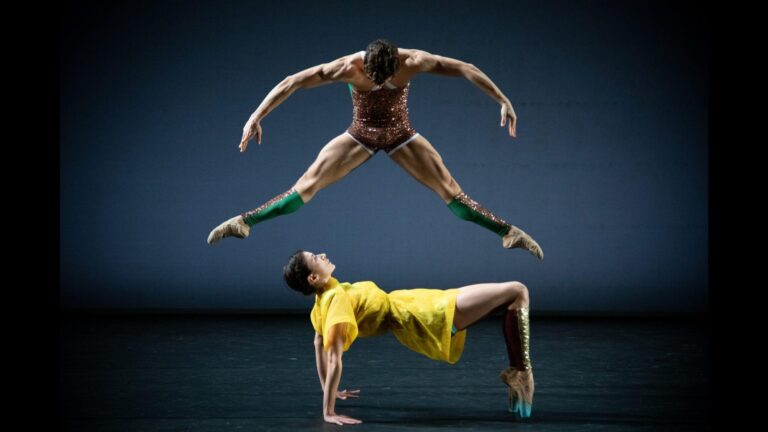
New choreography by Stina Quagebeur, nine outstanding dancers, performing in the newly opened V&A East Storehouse and costumes reinterpreted by our Costume Atelier with the kind permission of CHANEL: this reimagining pays homage to the work’s avant-garde origins while celebrating the creativity and diversity of East London.


Her approach honours the essence of the original while bringing the movement language into a modern context.
I call Le Train Bleu a museum piece — it captures its era and it’s beautiful to see.
Quagebeur describes Le Train Bleu as her most classical work to date but embraces the challenge of staying true to history while also bringing in new ideas.
“I always say my style is a bit more understated, focusing on the intention of movement rather than what you look like. That clashed a bit with the spirit of Le Train Bleu because there’s so much in the original of looking at each other, and an awareness of how you are being perceived”, she explains.
With a cast of nine dancers, Quagebeur aimed to fully explore their athleticism and artistry, echoing Bronislava Nijinska‘s original vision for her choreography.
Le Train Bleu was originally created for the legendary Ballets Russes. The company enjoyed a long-standing relationship with Coco Chanel, who supported its productions both artistically and financially. However, Le Train Bleu was the only production for which the iconic couturier designed all the costumes.
This very special ballet was performed in the newly opened V&A East Storehouse, home to a huge collection, including the museum’s Archives of Theatre and Performance. Among the many iconic objects is the front cloth designed by Pablo Picasso for the original performances of Le Train Bleu.
Two Women Running on the Beach (The Race), painted by Picasso, was reproduced by Prince Aleksandr Sharvashidze on a monumental scale of 6.78 x 8m. Picasso, so impressed by faithfulness of Sharvashidze’s reproduction, signed and dedicated the front cloth to Sergei Diaghilev, founder of Ballets Russes.

.jpg)