Noverre: Young Choreographers 2021 continued the Stuttgart Ballet’s long-standing tradition of fostering emerging choreographic talent, presenting seven original creations by members of the company. Founded in 1961 by John Cranko and Fritz Höver, Noverre has become one of the world’s most influential choreographic laboratories, launching the careers of artists such as Jiří Kylián, John Neumeier and William Forsythe. The 2021 edition, created during the COVID-19 pandemic, was presented as a special livestream from the Schauspielhaus Stuttgart, demonstrating that artistic creativity could flourish even under unprecedented circumstances.
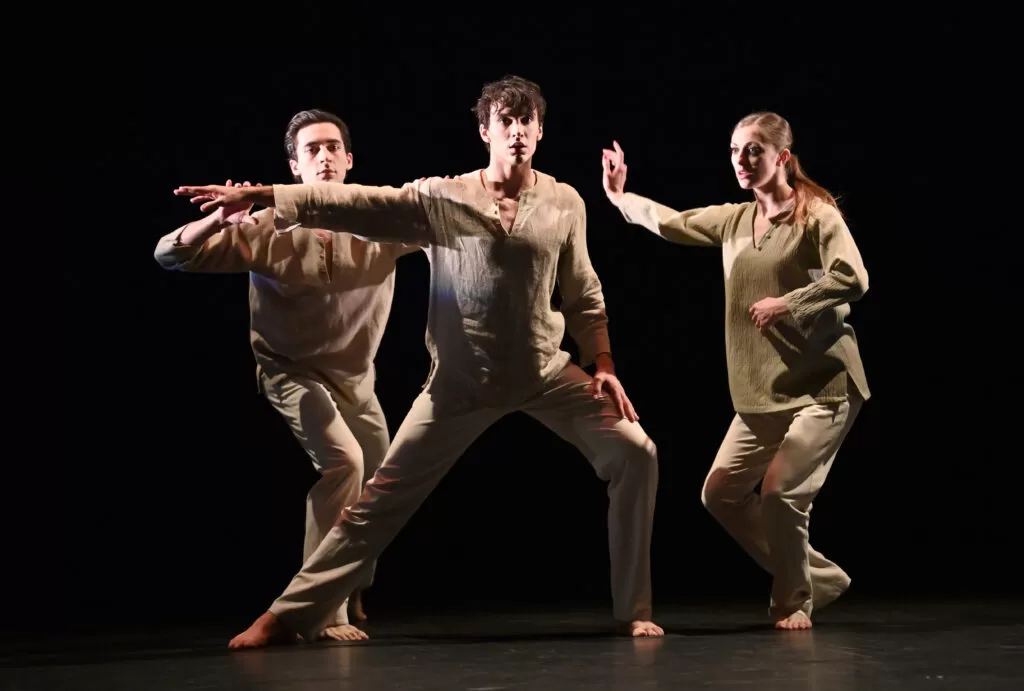
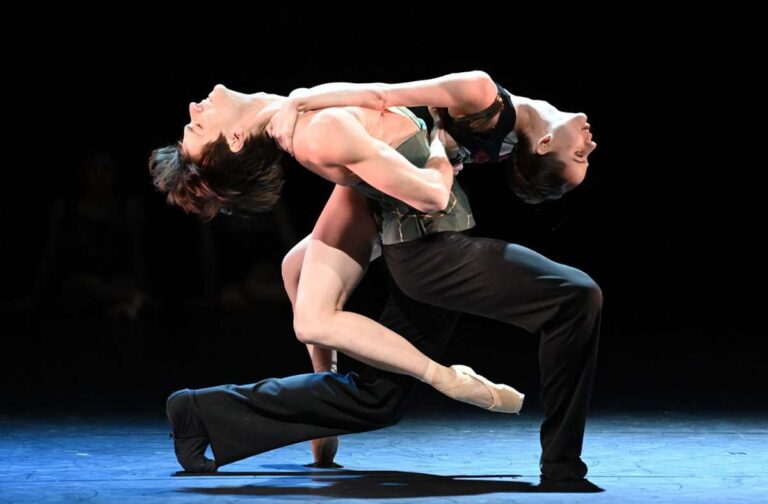
The evening opened with Peace Apart by Jessica Fyfe, an elegant neoclassical pas de deux danced by Fyfe herself and Moacir de Oliveira. Set to the lyrical music of Frédéric Chopin, the ballet explores intimacy, separation, and emotional resilience through flowing classical movement. A long strip of white fabric physically connects the dancers, becoming a visual metaphor for relationships that continue to bind people despite distance and uncertainty. The choreography gradually evolves from quiet lyricism into increasingly virtuosic passages, suggesting hope and renewal after periods of isolation.
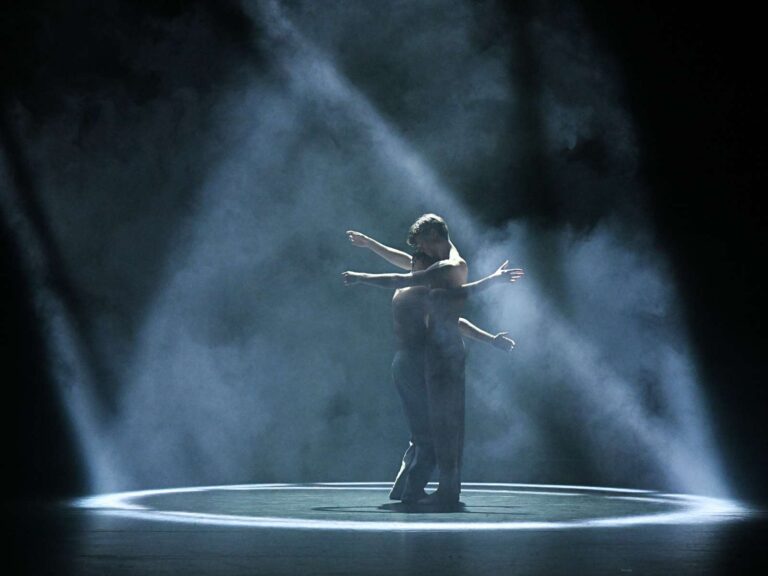
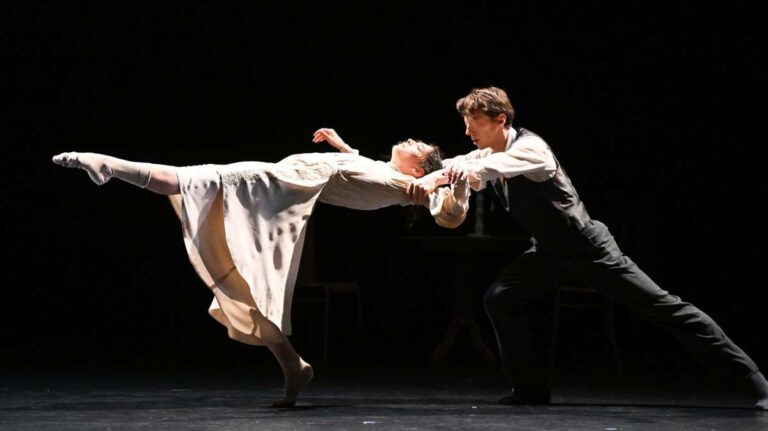
One of the programme’s emotional highlights was The Storm Before the Calm by Adrian Oldenburger. This psychologically charged duet follows a woman haunted by the memory of a past relationship, as grief and trauma take physical form on stage. Combining expressive partnering with theatrical imagery and dramatic lighting, Oldenburger creates a deeply cinematic atmosphere in which memory becomes almost tangible. Rather than depicting an external conflict, the ballet explores the invisible emotional storms that continue long after relationships have ended. Critics praised its powerful narrative clarity and emotional intensity.
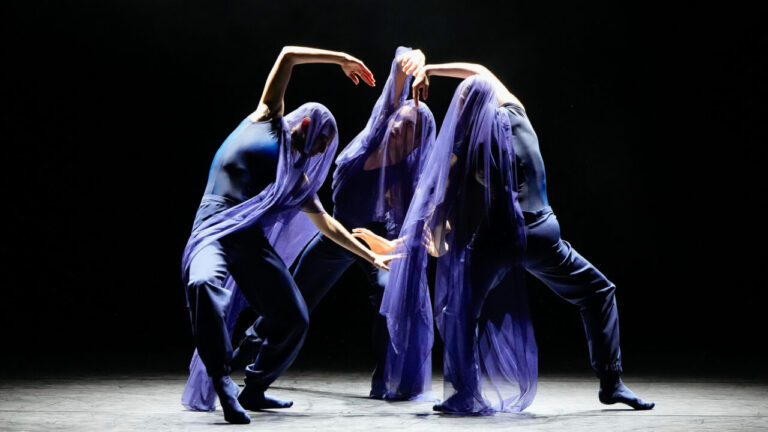
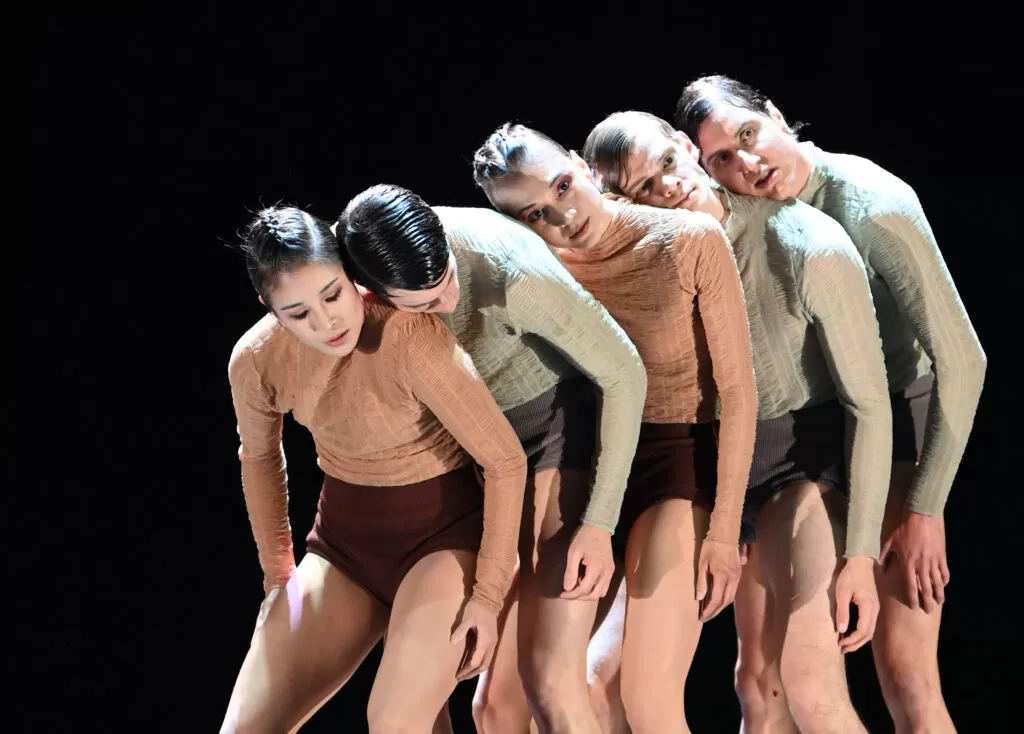
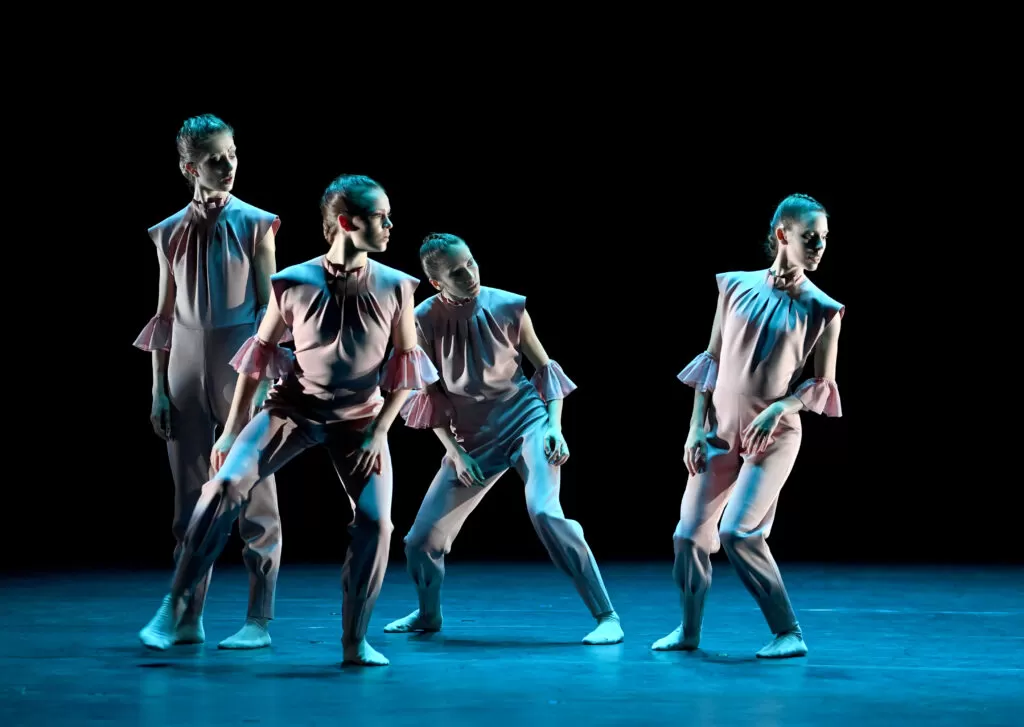
In Kineograph, Vittoria Girelli shifted the focus toward collective movement and sculptural composition. Inspired in part by Dante’s Inferno, the choreography transforms five dancers into interconnected living sculptures, constantly assembling and dissolving into new forms. Mirror elements incorporated into the costumes symbolise the human soul, while an eclectic musical collage ranging from Ludwig van Beethoven to contemporary experimental composers reinforces the work’s rich visual and emotional texture. The ballet reflects on the dualities of light and darkness, individuality and community, creating one of the evening’s most visually distinctive works.
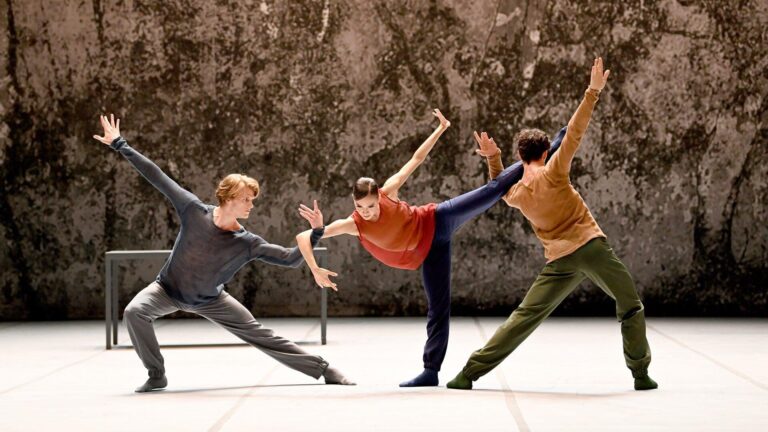
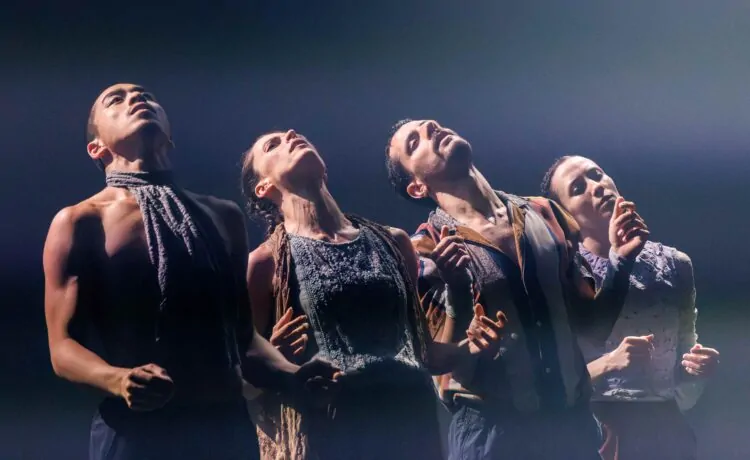
Bridges by David Moore offered a more optimistic perspective, using fluid ensemble choreography to examine connection, trust, and communication. The dancers continuously create and dismantle physical pathways between one another, suggesting that relationships are built through cooperation and mutual support. Set to the atmospheric music of Michael Brook, the work unfolds with understated elegance and calm emotional restraint.
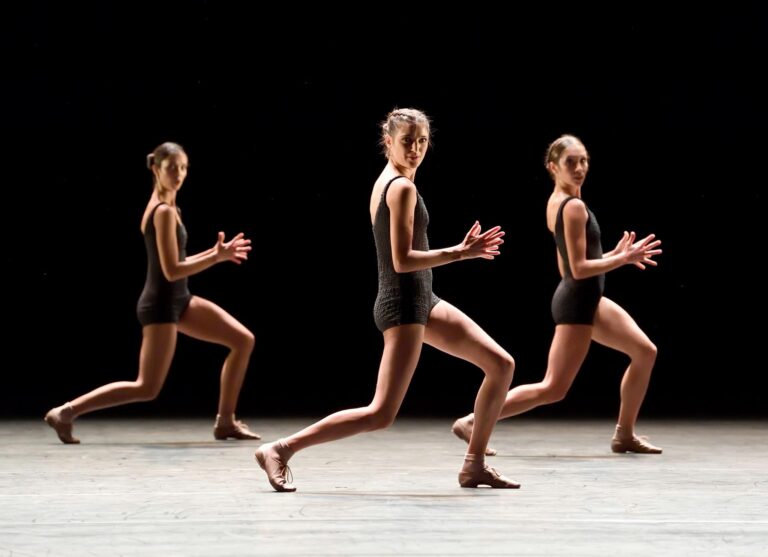
In Deltangi, Timoor Afshar explored the expressive possibilities of walking itself. Inspired by Persian culture and ideas of displacement, longing, and belonging, the choreography gradually expands simple pedestrian movement into a broader meditation on identity and migration. The understated vocabulary allows subtle emotional shifts to emerge naturally, creating a work of quiet introspection rather than overt theatricality.
The evening concluded with Agoloy by Shaked Heller, perhaps the programme’s most unconventional creation. Heller deliberately moves away from recognisably human behaviour, imagining dancers as mysterious living creatures with unfamiliar physical instincts. Angular limbs, unexpected body articulations, and playful yet strangely compelling interactions create a surreal world suspended between fantasy and reality. Despite its eccentric movement language, the ballet gradually reveals moments of tenderness, curiosity, and even romance, demonstrating Heller’s remarkable imagination and distinctive choreographic voice.
Together, these seven premieres demonstrated the extraordinary diversity of the Stuttgart Ballet’s young choreographers. From intimate duets and psychologically charged narratives to abstract movement research and sculptural ensemble works, Noverre: Young Choreographers 2021 reaffirmed the project’s role as one of Europe’s most important incubators for the next generation of choreographic talent.